Manually uninstalling Cloudera Embedded Container Service from a cluster
You can manually uninstall Cloudera Embedded Container Service from your cluster.
Before performing this procedure, ensure that you have activated the Cloudera Embedded Container Service parcel on the cluster hosts.
Before upgrading to Cloudera Data Services on premises 1.5.5 SP4 on Cloudera Embedded Container Service, you must:
- uninstall the NVIDIA GPU Operator
- uninstall the NVIDIA NicClusterPolicy and
Network OperatorAdditionally, on every MIG capable node clean up the following directories:
rm -rf /etc/cdi/*
rm -f  /etc/nvidia-container-runtime/config.toml
rm -rf /var/run/cdi/*
rm -rf /usr/local/nvidia/toolkit
During the installation of Cloudera Embedded Container Service, the directory for Longhorn and the LSO are decided by Cloudera Manager and defaults to /ecs.
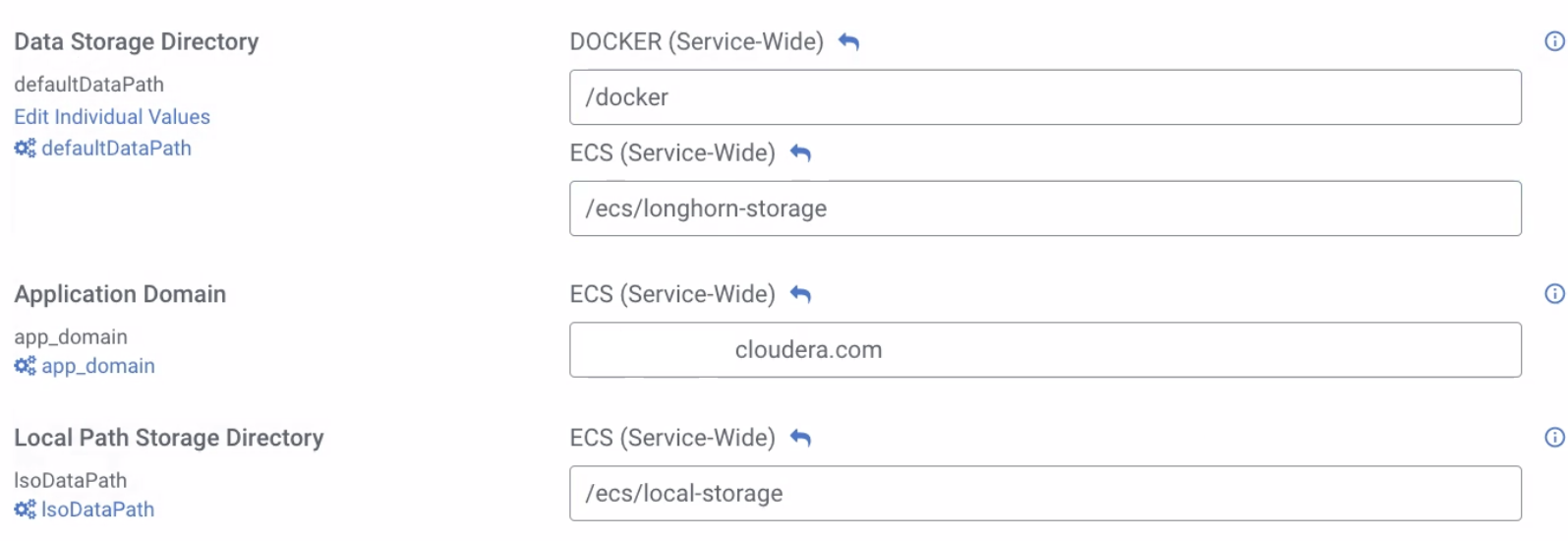
-
Delete the Cloudera Embedded Container Service cluster in Cloudera Manager.
-
In Cloudera Manager, navigate to Cloudera Data Services on premises and click
 . Click
Delete.
. Click
Delete.
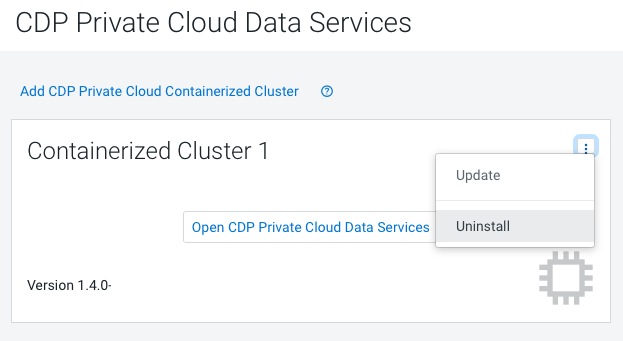
-
The Delete Cluster wizard appears. Click
Delete.
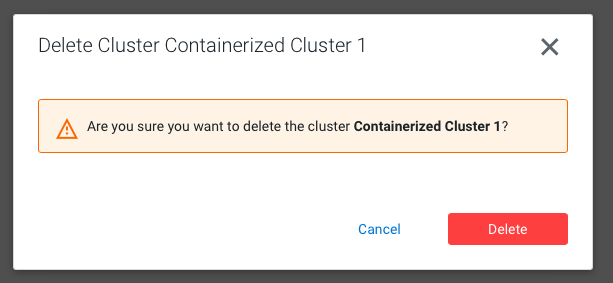
-
In Cloudera Manager, navigate to Cloudera Data Services on premises and click